Flevoland in January: short days and a lot of voles
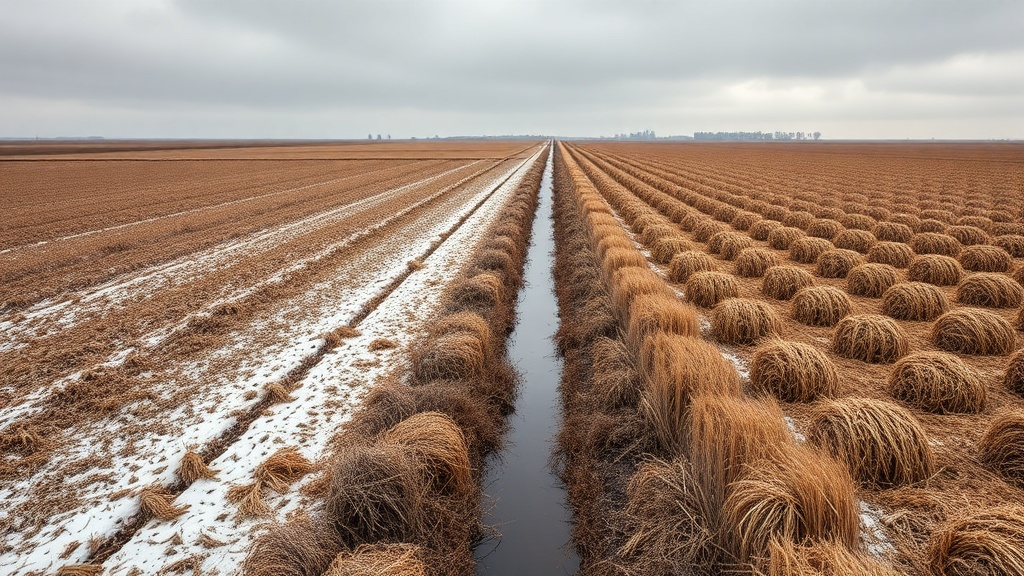
I drove to Flevoland on a Sunday in early January with the vague plan of spending three days looking at kestrels. My girlfriend thought this was eccentric. She's probably right. The province of Flevoland is a flat expanse of reclaimed seabed that the Dutch completed draining in the 1960s, and in winter, when the fields are bare after harvest, it looks like the edge of the world. It is exactly the right place to watch raptors.
The reason is simple: voles. Common voles (Microtus arvalis) are the primary prey of wintering kestrels in the Netherlands, and Flevoland's polder agriculture — large rectangular fields, maintained ditches, minimal tree cover — produces them in quantity. When the crops come off in autumn and the ground is exposed, vole runs become visible from above, and the kestrels know it.
Day one: Oostelijk Flevoland
I set up near Zeewolde, east of the Knardijk. The morning was overcast with a light northwest wind — not ideal photographically but fine for watching. Within the first hour I'd counted seven kestrels from one position, which is exceptional by South Holland standards where I usually feel lucky to find three in a half-day session.
Most were hunting independently, but I watched one interaction that I hadn't seen clearly before: a prey transfer between two adults in flight. The male arrived from the east carrying something — I couldn't identify it from 250m — and hovered briefly before dropping toward a perched female on a fence post. She launched, he released the prey midair, she caught it cleanly and landed again. The whole exchange took perhaps four seconds. I got twelve frames, four of them usable.
Day two: the A6 corridor
The verges of the A6 motorway between Lelystad and Emmeloord are, depressingly, one of the most productive kestrel habitats in Flevoland. The mown grass strips, the soil disturbance from road maintenance, and the heat from the tarmac surface all contribute to keeping vole populations active through winter. I drove the service roads parallel to the motorway for most of the morning, stopping at likely perches.
One male was hunting a specific 200-metre section of verge consistently. I watched him complete three successful hunts in 90 minutes, which is a higher success rate than I'd expect — perhaps 30-40% of hovers typically result in a strike for me to observe, and a much lower fraction in a capture. He appeared to be working the same vole run each time, hovering at 8-10 metres and dropping to the base of a particular stand of dead grass.
Day three: Zuidelijk Flevoland, towards Dronten
Rain from 08:00. I stayed in the car for three hours and watched a hedgerow from the road. Two kestrels — female and juvenile male — used the same fence wire section alternately, never both present simultaneously. The juvenile was identifiable by the streaked underparts and the slightly tentative quality of his perch landings compared to the adult female's decisive drop-and-grip.
When the rain paused briefly around noon I got out and walked 2km along a ditch. Flushed a short-eared owl from long grass, which was an unexpected bonus. Three more kestrels in that stretch. Total trip count: 23 individual kestrels observed, about 14 of which I'm confident were distinct birds rather than re-sightings.
What I'd do differently
Stay longer. Three days in Flevoland in January is the minimum, not the target. The light only cooperated for about four hours total across the trip, and I spent a disproportionate amount of time either waiting for it to improve or driving between locations. A week would let you stay in position when the light is good rather than constantly repositioning.
I'd also go further into Noordoostpolder. I was told by someone on Waarnemingen.nl that the area around Marknesse has reliably high vole densities in winter years, but I ran out of time. Next January.